Introduction
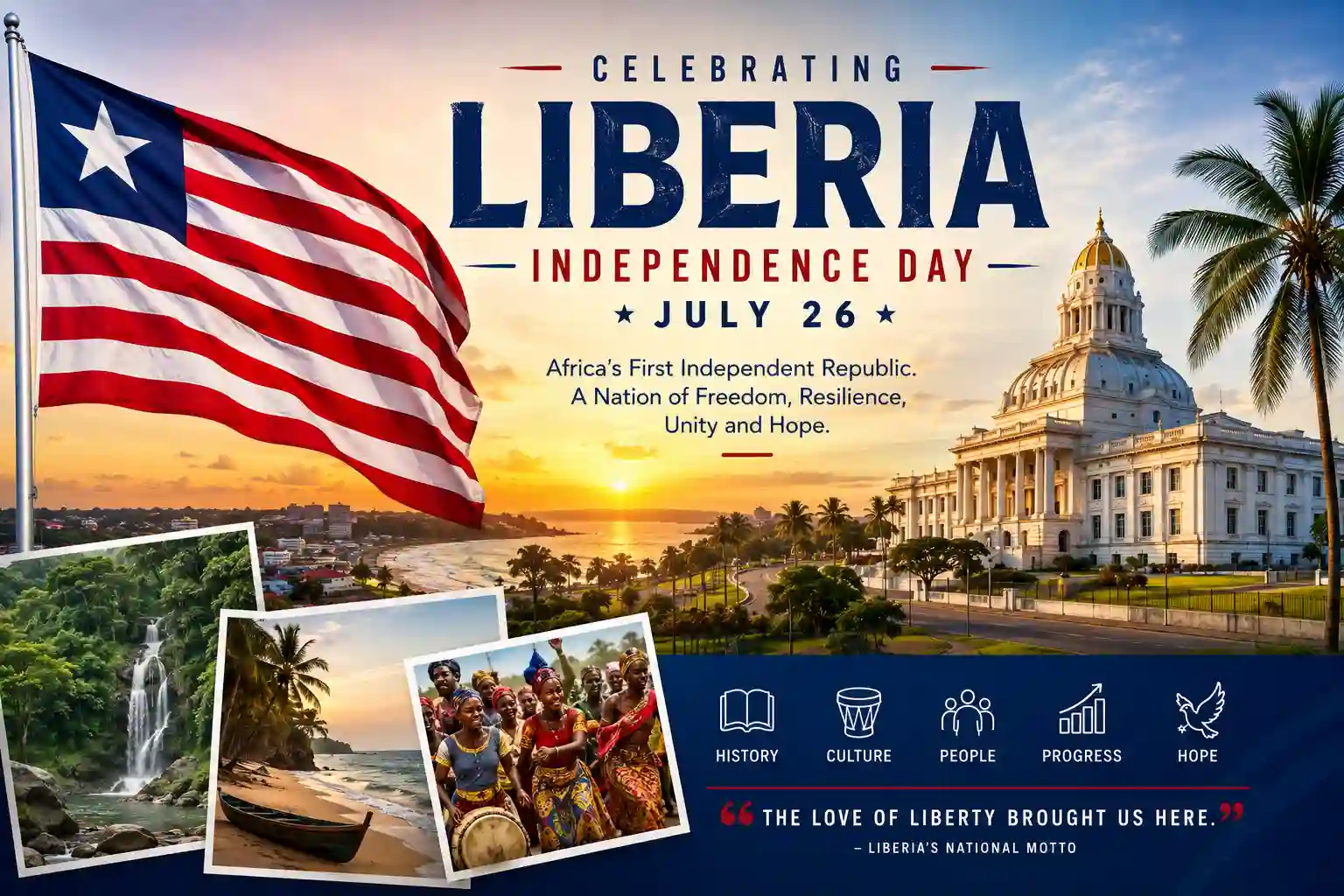
Every year on 26 July, Liberians around the world celebrate a defining moment in the nation's history—the declaration of independence in 1847. More than a public holiday, Independence Day is a celebration of freedom, resilience, unity, and hope. As Africa's first independent republic, Liberia has built a legacy founded on liberty and self-governance.
As my website officially launches on this historic day, I proudly dedicate this article to my beloved homeland. It celebrates Liberia's rich heritage, remarkable people, natural beauty, and the bright future that lies ahead.
Why July 26 Matters
Independence Day reminds Liberians of the courage and vision of those who founded the nation. It is a time to honour our history while renewing our commitment to peace, unity, and national development.
Across the country, the day is celebrated through flag-raising ceremonies, national parades, church services, cultural performances, educational activities, sporting events, traditional music and dance, family gatherings, and community festivals. These celebrations strengthen national pride and encourage every citizen to contribute to Liberia's continued growth.
Geography and Natural Beauty
Located on the west coast of Africa, Liberia is bordered by Sierra Leone, Guinea, Côte d'Ivoire, and the Atlantic Ocean. The country is blessed with lush tropical rainforests, rolling hills, rivers, waterfalls, mangrove forests, fertile farmland, and beautiful sandy beaches.
Liberia is also home to Sapo National Park, one of West Africa's most important protected rainforests, where wildlife such as forest elephants, pygmy hippopotamuses, chimpanzees, and hundreds of bird species thrive. With more than 560 kilometres of Atlantic coastline, Liberia offers tremendous opportunities for ecotourism and environmental conservation.
The Liberian People
Liberia is home to more than twenty indigenous ethnic groups, including Kpelle, Bassa, Gio, Mano, Kru, Grebo, Vai, Gola, Kissi, Lorma, Mandingo, Krahn, Gbandi, Dei, Belleh, and Mende. Together, these communities contribute to the country's rich cultural identity through their languages, traditions, music, and customs.
Despite this diversity, Liberians are united by shared values of hospitality, resilience, and community. From education and healthcare to business, agriculture, sports, and technology, Liberians continue to make meaningful contributions that shape the nation's future.
Culture and Traditions
Liberian culture reflects centuries of tradition and community spirit. Festivals and celebrations are filled with colourful attire, drumming, storytelling, traditional dances, cultural ceremonies, and community feasts, preserving customs that have been passed from generation to generation.
Liberian cuisine is equally diverse, with popular dishes such as Jollof Rice, Palm Butter, Cassava Leaf, Potato Greens, Fufu, Dumboy, Pepper Soup, Fried Plantain, Torborgee, and Kala. Music also plays an important role in everyday life, blending traditional rhythms with modern genres such as Hipco, Afrobeat, Gospel, Hip-Hop, and R&B.
Languages of Liberia
English is Liberia's official language and is widely used in government, education, business, and public administration. Alongside English, many indigenous languages—including Kpelle, Bassa, Vai, Gio, Mano, Kru, Grebo, Gola, Kissi, Lorma, Mandingo, and Krahn—continue to preserve the country's rich cultural heritage and strengthen community identity.
National Symbols
Liberia's national symbols represent its history, independence, and aspirations.
The Liberian Flag, with its eleven red and white stripes, blue square, and single white star, symbolises liberty, courage, and the founding of the republic. The Coat of Arms, featuring a ship, rising sun, dove, palm tree, plough, and shovel, represents peace, hope, agriculture, commerce, and national progress.
The country's national motto, "The Love of Liberty Brought Us Here," continues to inspire Liberians to uphold the values of freedom, justice, unity, and national pride.
Economy and Development
Liberia is richly endowed with natural resources, including iron ore, gold, diamonds, rubber, timber, fertile agricultural land, and fisheries. Agriculture remains the backbone of the economy, while sectors such as mining, construction, telecommunications, banking, tourism, manufacturing, and entrepreneurship continue to drive economic growth.
As digital technology expands, new opportunities are emerging for businesses, startups, and young professionals. With continued investment in infrastructure, education, innovation, and good governance, Liberia has the potential to build a more resilient and inclusive economy.
Education and Technology
Education is essential to Liberia's long-term development. Schools, universities, and vocational institutions continue to prepare students with the knowledge and practical skills needed to succeed in today's world.
Technology is also transforming education, business, healthcare, and public services. Through digital learning, ICT training, software development, and entrepreneurship, young Liberians are creating innovative solutions that contribute to national growth and prepare the country for the digital economy.
Tourism in Liberia
Liberia is one of West Africa's emerging tourism destinations, offering visitors a unique blend of natural beauty, history, and culture. Popular attractions include Providence Island, Kpatawee Waterfalls, Robertsport, Sapo National Park, Lake Piso, Buchanan Beaches, and many historical landmarks.
From relaxing on pristine beaches to exploring tropical rainforests and experiencing traditional festivals, Liberia offers unforgettable experiences for travellers seeking authentic African hospitality and adventure.
Challenges and Opportunities
Like many developing nations, Liberia continues to address challenges such as infrastructure development, healthcare access, quality education, youth unemployment, and climate resilience. While these issues require continued effort and investment, they also present opportunities for innovation, entrepreneurship, and sustainable development.
By strengthening institutions, supporting local businesses, investing in technology, and empowering young people, Liberia can continue building a stronger and more prosperous future.
Why Liberia Inspires Hope
Liberia's history is one of resilience and determination. From becoming Africa's first independent republic to rebuilding after difficult periods, the nation has consistently demonstrated the strength and perseverance of its people.
Today, Liberians are making meaningful contributions in education, healthcare, business, agriculture, technology, sports, public service, and the creative industries. Their dedication, innovation, and optimism continue to inspire confidence that Liberia's brightest days are still ahead.
Interesting Facts About Liberia
· Liberia became independent on 26 July 1847.
· It is Africa's first independent republic.
· English is the official language.
· Monrovia is the capital and largest city.
· The Liberian Dollar (LRD) is the national currency.
· Liberia's flag resembles the United States flag but features one white star, representing its independence.
· The national motto is "The Love of Liberty Brought Us Here."
· Liberia is home to one of West Africa's largest remaining tropical rainforests.
· The country has more than twenty indigenous ethnic groups.
· Liberia's Atlantic coastline stretches for over 560 kilometres.
Frequently Asked Questions
Why is Liberia called the "Land of Liberty"?
Liberia's name reflects its founding on the principles of liberty, freedom, and self-governance.
Why is Independence Day celebrated on 26 July?
It commemorates 26 July 1847, when Liberia declared itself an independent republic.
What is Liberia famous for?
Liberia is known for being Africa's first independent republic, its rich cultural heritage, tropical rainforests, beautiful coastline, and resilient people.
Is Liberia a good place to visit?
Yes. Liberia offers stunning beaches, waterfalls, wildlife, historical sites, vibrant culture, and warm hospitality, making it a rewarding destination for visitors.
Conclusion
As Liberia celebrates its 179th Independence Day, we honour the achievements of the past while embracing the opportunities of the future. Every generation shares the responsibility of building a nation founded on peace, unity, integrity, innovation, and sustainable development.
As this website launches on this historic occasion, it is my sincere hope that it will contribute to Liberia's progress by sharing knowledge, promoting creativity, encouraging innovation, and supporting digital transformation.
Happy 179th Independence Day, Liberia!
May the love of liberty continue to guide our nation toward peace, unity, progress, and lasting prosperity. 🇱🇷
References & Further Reading
To learn more about Liberia, visit these trusted sources:
Government of Liberia
National Investment Commission of Liberia
Liberia Institute of Statistics and Geo-Information Services (LISGIS)
UNESCO – Liberia Country Profile
World Bank – Liberia Overview
African Development Bank – Liberia
Encyclopaedia Britannica – Liberia
BBC News – Liberia