Introduction
The internet has become an important part of everyday life. People use it for communication, education, business, banking, entertainment, and social networking. While the internet offers many benefits, it also exposes users to risks such as scams, stolen passwords, fake websites, identity theft, and hacked accounts.
Protecting yourself online does not require advanced technical knowledge. Simple habits can greatly reduce your chances of becoming a victim. The following practical steps can help you use the internet more safely and confidently.
1. Use Strong and Unique Passwords
A strong password is one of the first protections for your online accounts. Avoid using your name, telephone number, birth year, or simple combinations such as ‘12345678’.
Create passwords that are long and difficult to guess. A combination of unrelated words, numbers, and symbols can work well. More importantly, use a different password for each important account. When the same password is used everywhere, one stolen password can expose several accounts.
A trusted password manager can help you create and store strong passwords securely.
2. Enable Two-Factor Authentication
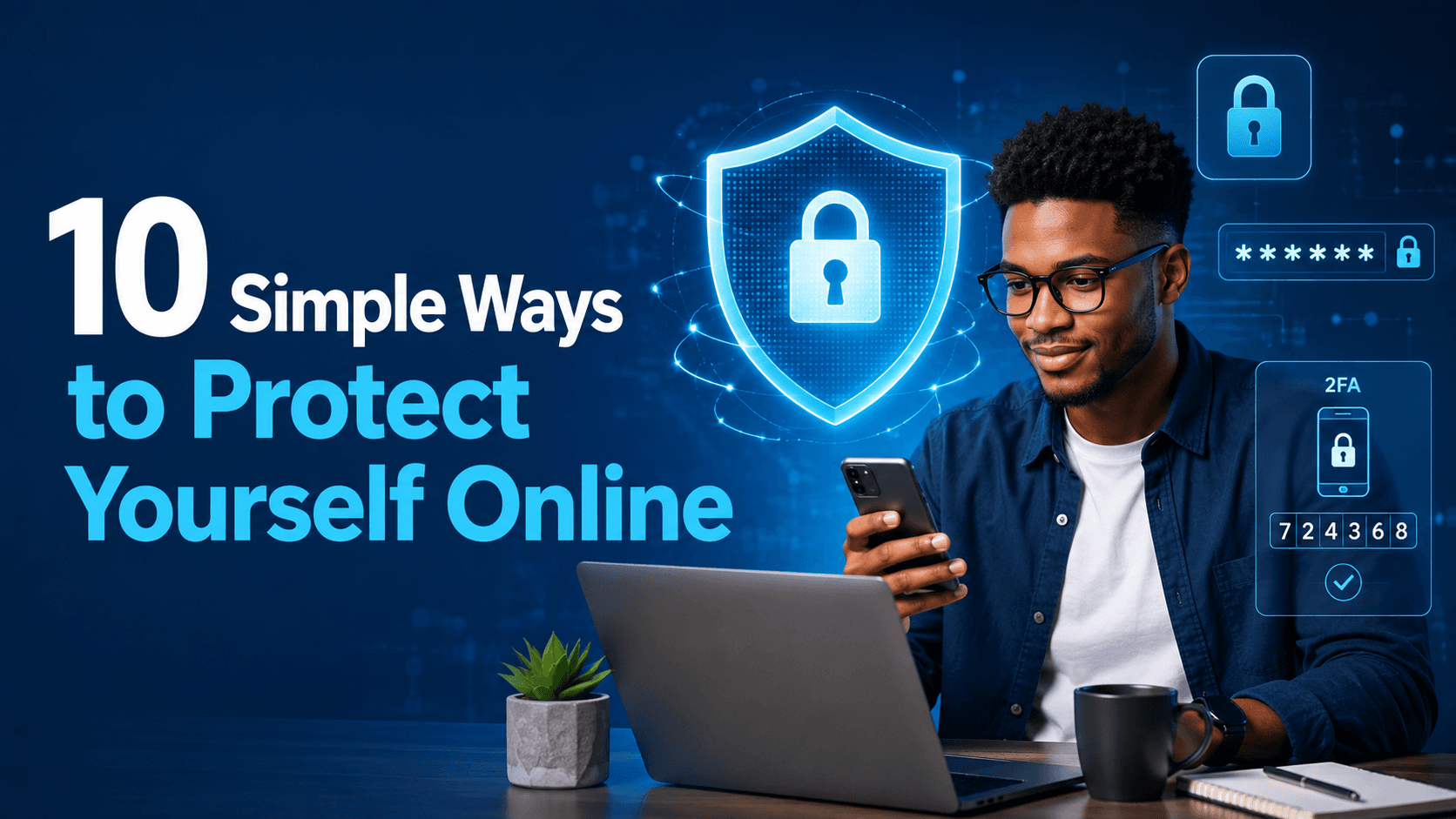
Two-factor authentication adds another security step after entering your password. The second step may be a code from an authenticator application, a fingerprint, a text message, or a login notification.
This extra protection is important because someone who discovers your password may still be unable to access your account without the second verification method.
Enable two-factor authentication on your email, social media, banking, mobile-money, and website administration accounts. Never share a verification code with anyone.
3. Be Careful with Phishing Messages
Phishing messages are fake emails, text messages, or social media messages designed to steal personal information. They may claim that you have won a prize, received a job offer, or must urgently verify your account.
These messages often create fear, excitement, or pressure so that you act without thinking. Before clicking a link, carefully check the sender and the message.
When a request seems suspicious, contact the organisation through its official website, application, or telephone number instead of using the link provided in the message.
4. Check Website Addresses Carefully
Fake websites can look almost identical to legitimate ones. Before entering a password, card number, or personal information, examine the website address.
Look for misspelled company names, extra letters, unusual numbers, or strange domain endings. A secure website may display HTTPS and a padlock symbol, but these signs alone do not guarantee that the website is trustworthy.
The safest approach is to type the official website address directly into your browser or use the organisation’s verified application.
5. Protect Your Social Media Information
Social media allows people to connect and share information, but oversharing can create security risks. Criminals may use public information to impersonate you, guess passwords, or answer account-recovery questions.
Avoid posting sensitive details such as your home address, identification documents, financial information, private telephone numbers, or travel plans.
Review your privacy settings regularly and be careful when accepting friend requests from unfamiliar accounts. A fake account may copy the name and photograph of someone you know.
6. Use Public Wi-Fi Carefully
Free public Wi-Fi can be convenient, but it may not always be secure. Unknown networks can expose your online activity or lead you to fake login pages.
Avoid accessing banking, mobile-money, business systems, or other sensitive accounts while connected to an unfamiliar public network.
When possible, use your mobile data for important transactions. Also turn off automatic Wi-Fi connections so that your device does not join unknown networks without your permission.
7. Keep Your Devices Updated
Software updates do more than add new features. They often fix security weaknesses that criminals may use to attack devices.
Update your smartphone, computer, web browser, social media applications, banking applications, and antivirus software regularly. Automatic updates are helpful because they install important fixes without requiring you to remember.
Only download software and updates from official application stores or trusted websites.
8. Make Online Payments Safely
Before sending money online, confirm the identity of the seller or recipient. Check the account name, telephone number, amount, and reason for payment.
Be cautious when someone pressures you to send money immediately. Scammers often create false emergencies to prevent people from thinking carefully.
Never share your PIN, account password, card security code, or one-time verification code. A genuine financial institution should not ask you to send these details through an ordinary message.
9. Back Up Important Files
A backup is an extra copy of your important information. It can protect you if your device is lost, stolen, damaged, or affected by harmful software.
Back up schoolwork, business records, family photographs, certificates, financial documents, and website files. You can use trusted cloud storage, an external drive, or another secure device.
Check your backups occasionally to make sure the files can still be opened and restored.
10. Act Quickly When an Account Is Hacked
Warning signs of a hacked account may include unknown login alerts, messages sent without your knowledge, unfamiliar purchases, or password changes you did not request.
When this happens, use the official account-recovery process immediately. Change your password, sign out of unfamiliar devices, remove suspicious applications, and enable two-factor authentication.
You should also warn your contacts if suspicious messages were sent from your account. When financial information is involved, contact your bank or payment provider as soon as possible.
Conclusion
Online safety depends on the choices you make every day. Strong passwords, careful clicking, software updates, secure payments, and regular backups can protect your personal information and online accounts.
Whenever a message creates unusual urgency, fear, or excitement, pause before responding. Take a few seconds to verify the sender, website, or payment request.
Cybersecurity is not only for experts. Every internet user has a role to play in protecting themselves, their families, and their businesses online.
Further Learning
For more beginner-friendly cybersecurity lessons, search YouTube for the official Google Safety Centre or Microsoft Security channels. Their videos explain password protection, phishing, account security, and safer internet use in simple terms.